


The U.S. Staircase Market in 2026: What’s Actually Moving the Needle
After thirty-some years on this side of the trade — from custom shops in the Carolinas to spec builders in Texas — I can tell you the American staircase business has shifted more in the last 24 months than it did in the prior decade. Here’s the read from where I sit.
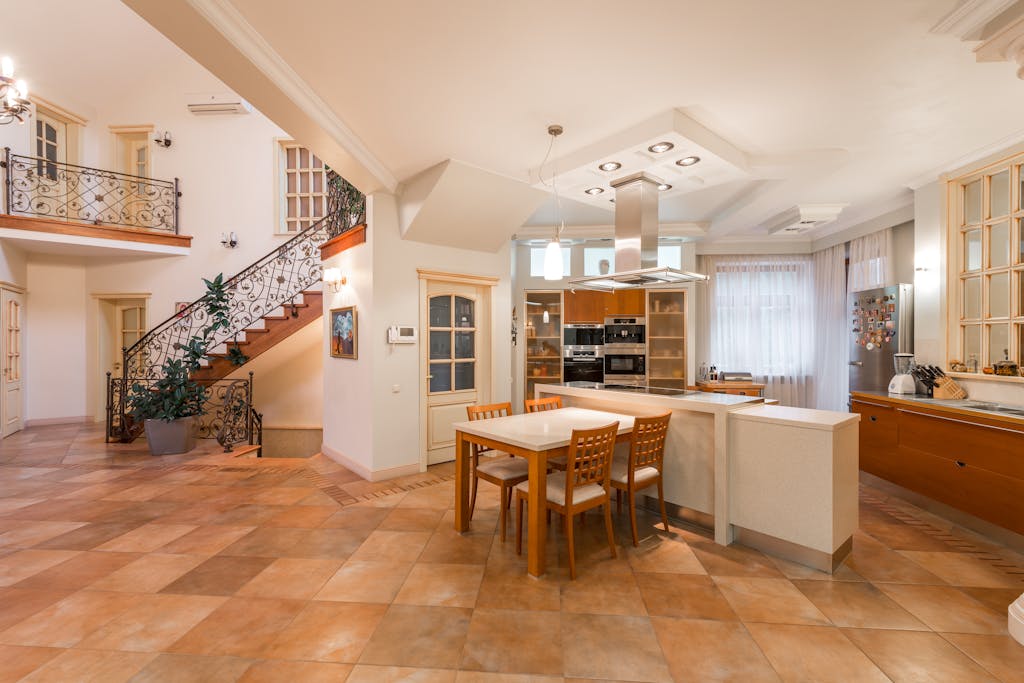
Open risers are no longer “high end” — they’re the baseline ask. Five years ago, a floating or open-riser stair was a custom-home conversation. Today I’m seeing them spec’d into $700K production builds in Charlotte, Phoenix, Nashville. The 2024 IRC clarifications around 4-inch sphere requirements settled a lot of the inspector arguments, and that gave designers permission to go bolder. Closed-riser oak stairs still sell, but they’re no longer the default — they’re a deliberate choice.
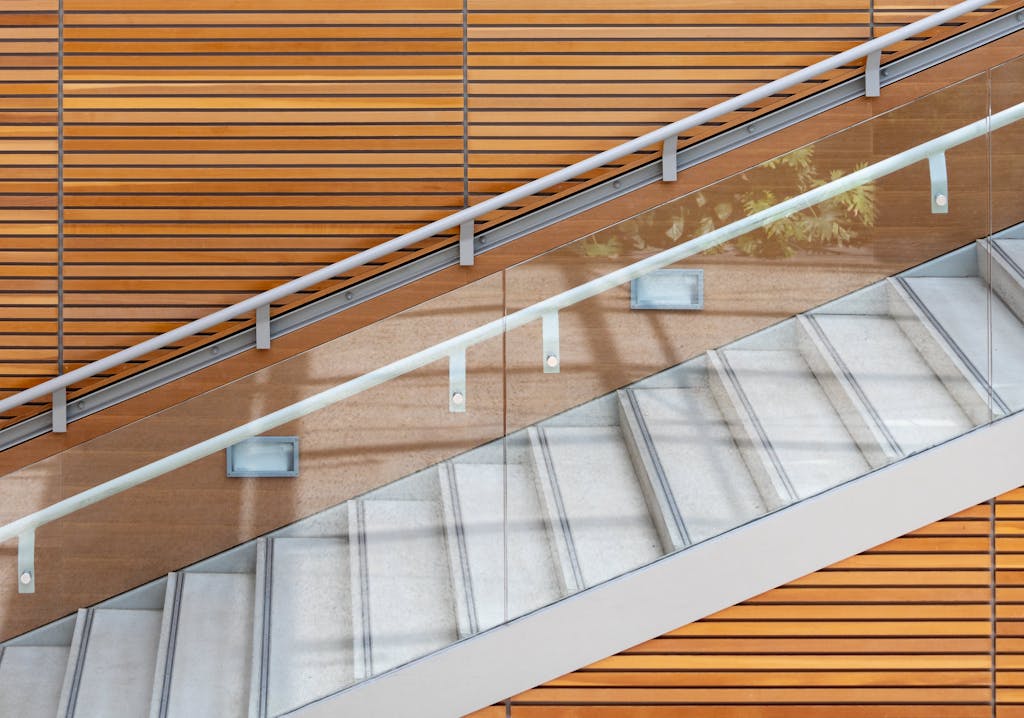
Mixed materials have eaten the market. Pure all-wood stairs are now maybe 30% of new installs in the upper-mid and luxury brackets. The dominant build is a steel mono-stringer or open-stringer carriage with white oak treads, often paired with frameless glass guardrail or a slim 1/2-inch black rod infill. Architects love it because it photographs well; clients love it because the steel reads as “modern” without committing to industrial.
White oak is the only species that matters right now. Walnut is recovering, but white oak — quarter-sawn, rift-cut, character-grade — is what every designer is asking for. Demand has held supply prices firmer than anyone expected through 2025. If you’re a fabricator, lock in mill relationships now; the squeeze isn’t easing.
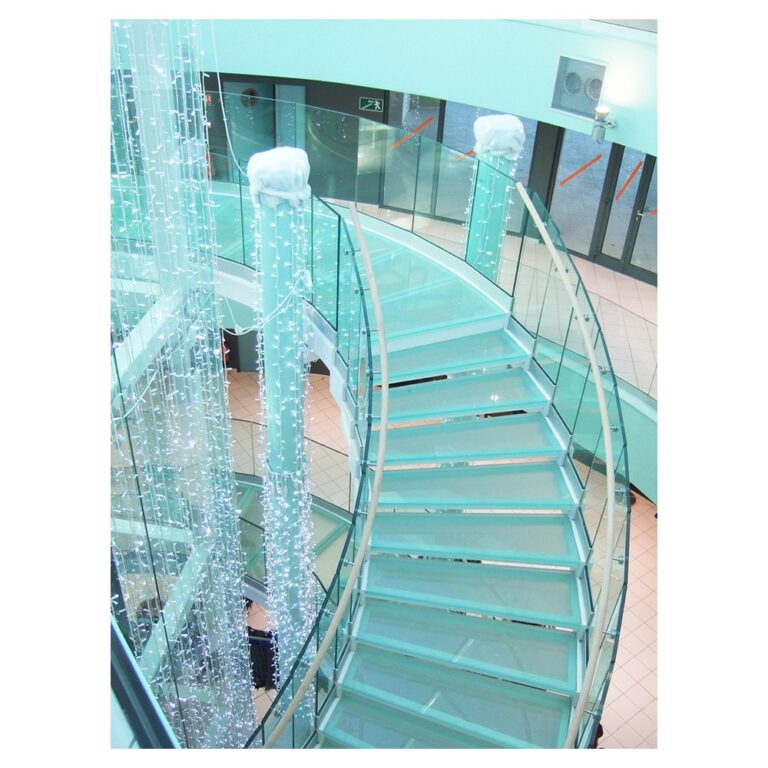
Cable rail is fading. Glass and slim rods are taking over. The cable look had its decade. What’s pulling ahead in 2026 is frameless tempered glass — usually 1/2-inch with a top-cap-free standoff system — and ultra-thin (3/8-inch and 1/2-inch) black powder-coated rods. Cable still moves in the deck market, but interior installs have moved on.
Aging-in-place is a real spec line item now. Boomers are remodeling, and they’re remodeling for the next 25 years. Integrated LED tread lighting, contrast-striped nosings, code-compliant return handrails on both sides, and slightly reduced 7-inch risers in custom builds — these aren’t accessibility add-ons anymore, they’re standard requests in the $1M+ remodel market.
Prefab and modular stair shipments are exploding. The labor crunch hasn’t gone anywhere. Site-built installs that used to take 5–7 days are getting replaced with factory-built modular units that drop in over a long afternoon. Factories that invested in CNC and BIM-to-fabrication workflows are eating share from old-school carpenter-built shops. If you can ship a stair as a single engineered assembly, you’re winning bids.
Supply chains have professionalized. Trade dynamics over the last two years have pushed suppliers — domestic and overseas — to step up. The factories winning U.S. business are the ones that have invested in pre-engineered shop drawings, IRC-compliant component sets, and predictable container-level logistics. Builders don’t want surprises at customs or at install. The supplier base is leaner, more technical, and more reliable than it was three years ago.
Lighting is the sleeper category. Integrated stair lighting — recessed LED strips under nosings, riser-washing fixtures, motion-activated path lighting — has gone from “luxury upcharge” to “expected on anything north of $400K.” The wiring infrastructure adds maybe 1–2% to stair cost; the perceived value is much higher. Smart-home integration (HomeKit, Matter) is the next frontier.
Where it’s headed. Watch three things in 2026: first, IRC 2027 drafting around guardrail and graspable handrail definitions, which could open or close design options on cable and horizontal rail; second, the continued consolidation of regional stair shops into a handful of national fabricators with logistics arms; third, AI-assisted stair design tools that are starting to compress the engineering-to-shop-drawing timeline from weeks to days.
The American staircase isn’t a commodity anymore. It’s a feature — a focal point that buyers and designers are willing to pay for. For factories, fabricators, and dealers who can deliver design, engineering, and predictable logistics in one package, the next 24 months are the best window we’ve seen in a long time.