


U.S. Residential Staircase Design Trends
Making them safer, greener, and smarter.
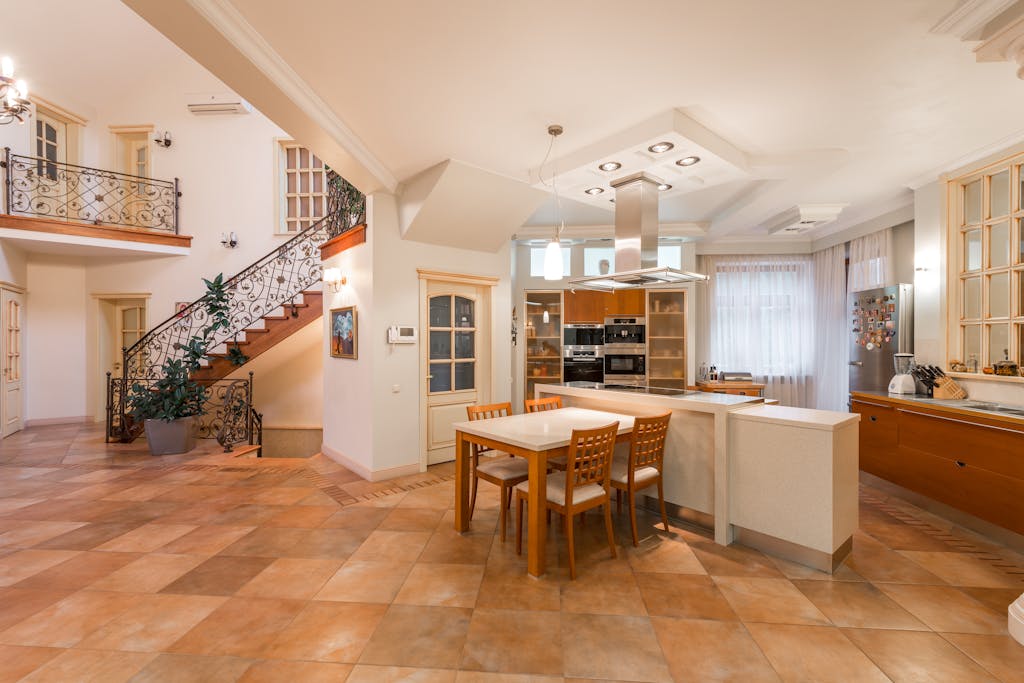
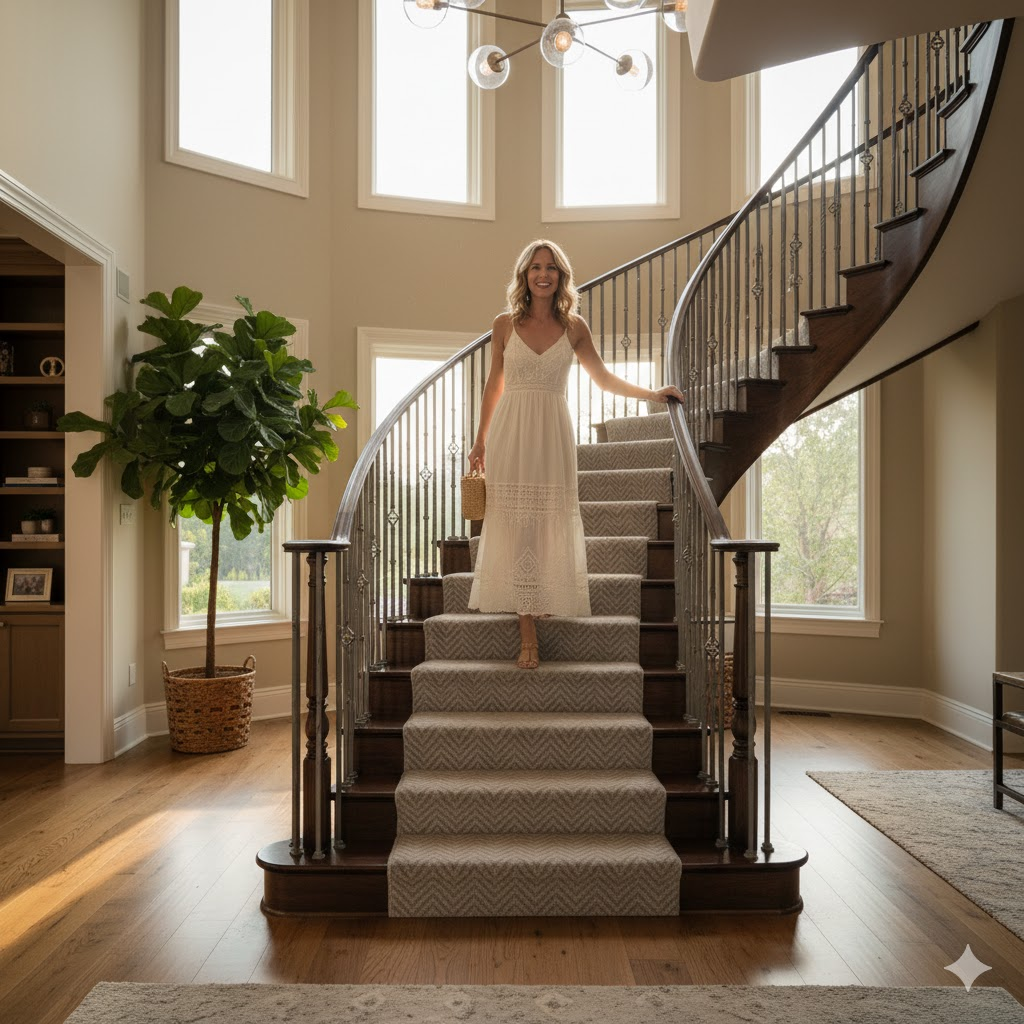
In the current U.S. residential market, the staircase is becoming a focal point in the architecture now. not merely a functional component for vertical circulation. Industry-wide, practitioners are seeing a convergence of updated building codes, material innovation, and evolving homeowner expectations that is pushing the standard for both design and performance.
These new codes are the new minimum for safety.
With the latest revisions to the International Residential Code (IRC) taking effect in 2024 across numerous states, staircase safety standards have been brought into sharper focus. These updates directly address long-standing problem areas by refining dimensional tolerances—such as the maximum 7¾-inch riser height and 10-inch minimum tread depth—and mandating stricter structural strength for guardrails.
For architects and contractors, these IRC updates are not just compliance hurdles; they are the foundation for a superior programmatic experience. Adhering to these measurements ensures a comfortable, accessible, and verifiably safe rhythm of ascent and descent, reducing both liability and end-user modifications.
It’s become a standard part of the project now, not just an add-on
it’s not just a client preference now—sustainability is a standard requirement for materials. The application of FSC-certified wood, recycled steel, and low-VOC (Volatile Organic Compound) finishes is now widespread.
Market-leading manufacturers like Viewrail and Keuka Studios have made these “green” options a core part of their product lines. While these material specifications often carry a 15-20% cost premium over conventional builds, a growing number of clients are prioritizing long-term value and environmental responsibility over initial cost.
Getting That Open Look the Right Way
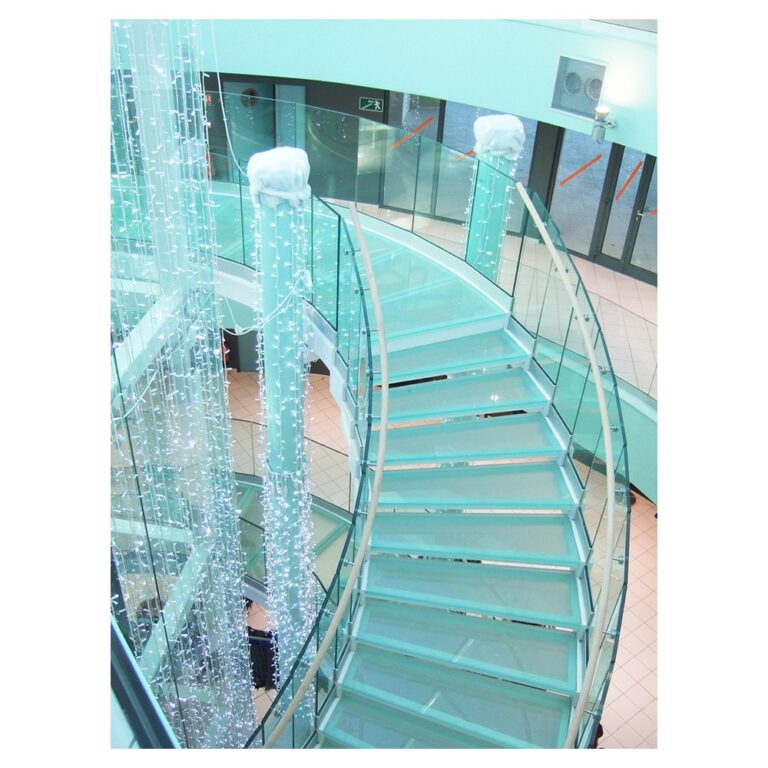
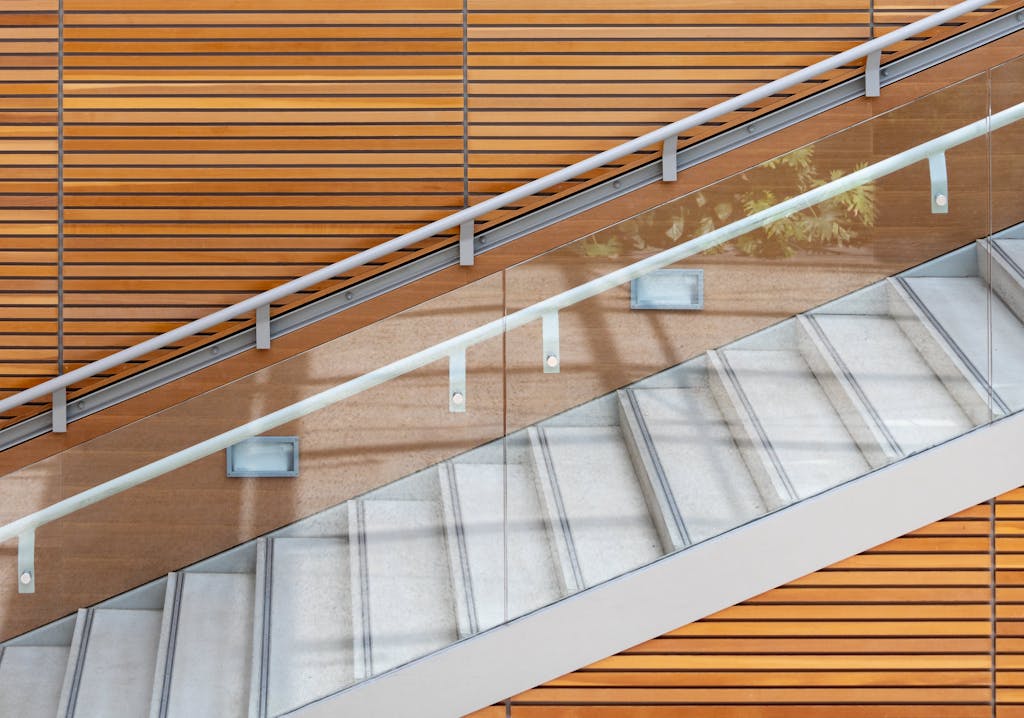
when it comes to the look of a modern house, everyone still wants those ‘floating’ stairs and glass railings. They’re super popular. Why? Because they just make the whole place feel more open and bright. This is a huge plus, especially if you’re in a smaller city home or you just have an open-concept layout.
But here’s the tricky part: you have to get that clean, simple look without cutting any corners on safety. Making sure it’s structurally strong is non-negotiable. The trick is to make it look light and effortless — even though there’s a ton of structure hidden inside.”
Technology’s Role: Precision Fabrication, Smart Integration
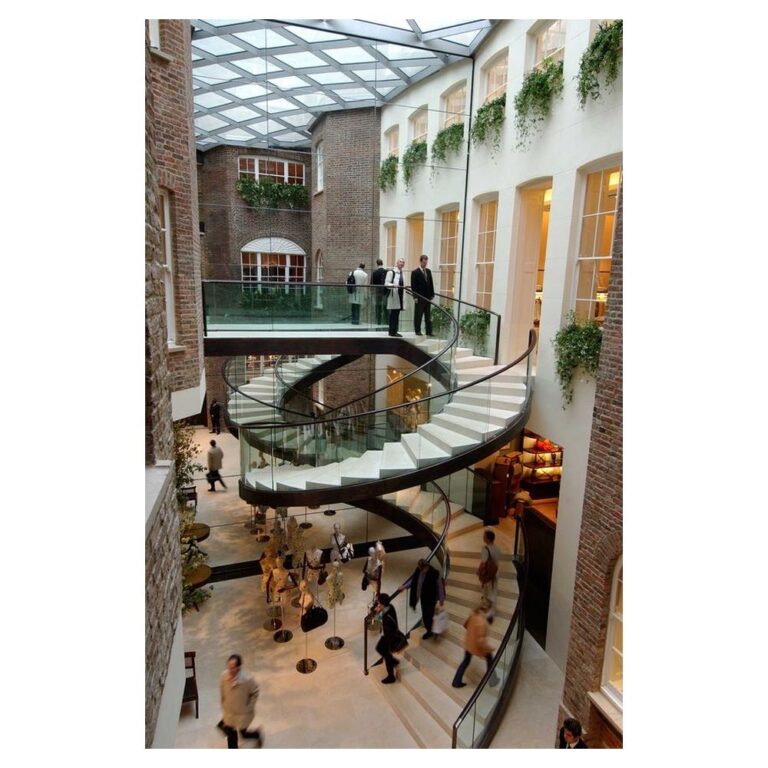
Digital fabrication is fundamentally reshaping execution. On the job site, laser-guided measurements and CNC-cut stringers enable millimeter-level precision. This technology dramatically reduces on-site fabrication errors and installation time, especially when executing complex geometries like curved or winding stairs.
On high-end projects, this precision extends to integrating motion-activated LED lighting systems directly into treads or risers. These systems, compatible with home automation platforms like Lutron or Control4, merge architectural detail with functional home technology, primarily to enhance nighttime safety.
Market Outlook
As material costs stabilize after years of volatility, the industry focus is observably shifting from “value engineering” back to long-term quality investment. The demand for durable, code-compliant, and eco-conscious stair systems is projected to continue its upward trend well into 2026.
The American staircase is no longer an afterthought; it is evolving into a fully integrated architectural component where code, materials science, and spatial design converge.